
.svg)
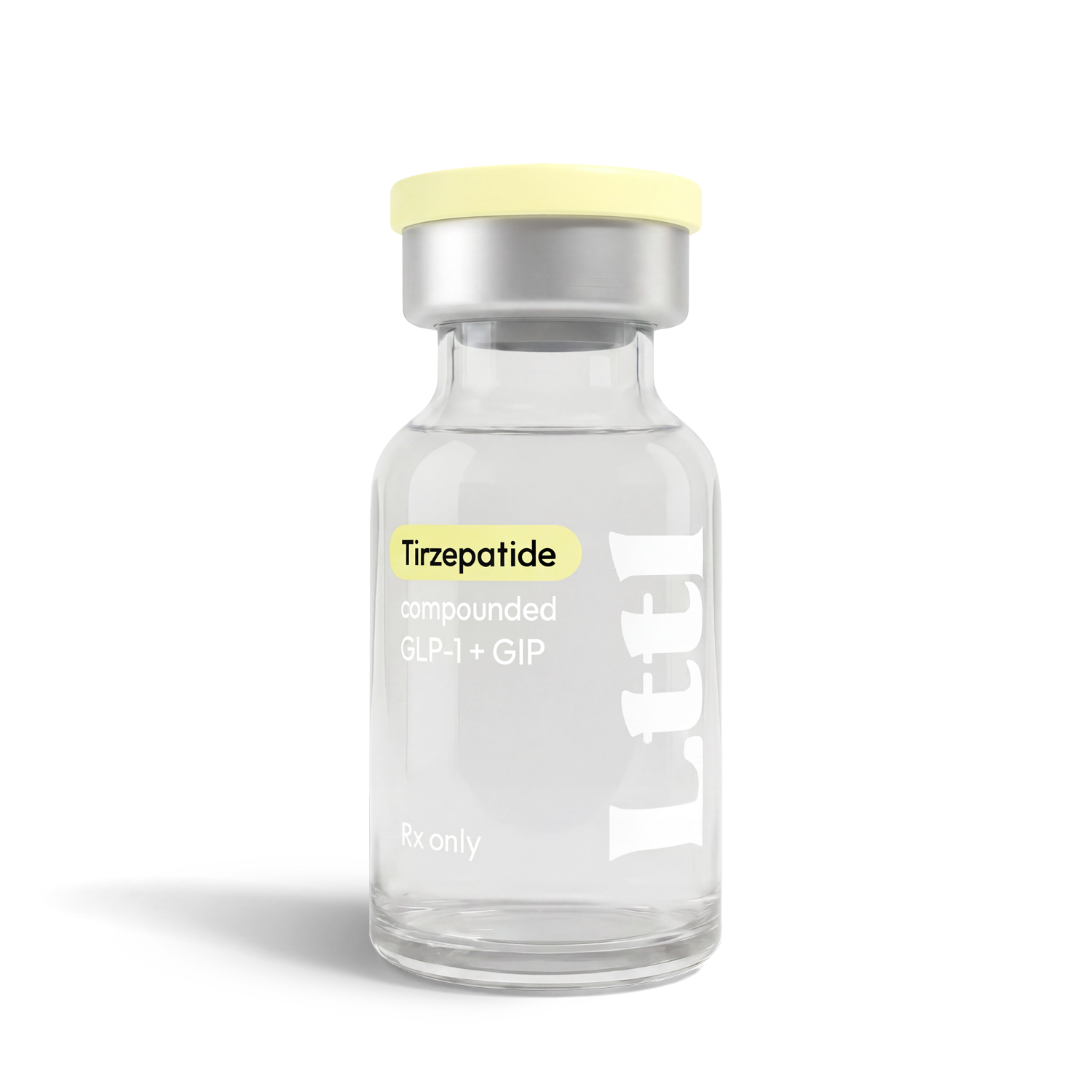




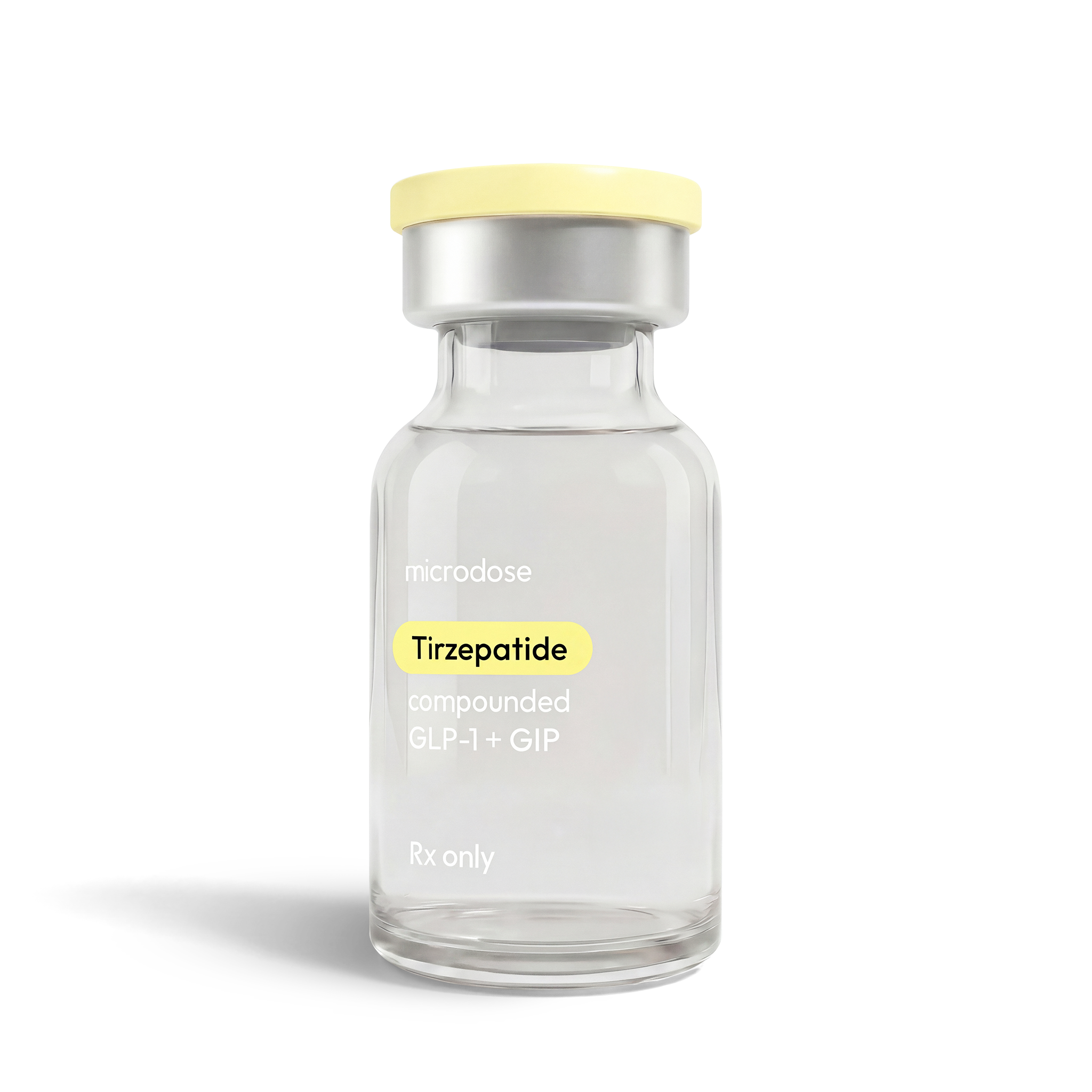
What Is Tirzepatide?
Tirzepatide is a dual GIP and GLP-1 receptor agonist: a prescription medication that activates two hormonal pathways simultaneously, distinguishing it mechanistically from every other GLP-1 medication currently available for weight management. It was originally developed for type 2 diabetes and later studied extensively for chronic weight management, where it produced weight loss results that exceeded anything previously seen in a pharmacological trial for obesity.
Tirzepatide appears under two brand names depending on the indication: Mounjaro is approved for type 2 diabetes, and Zepbound is approved for chronic weight management in adults and for moderate to severe obstructive sleep apnea in adults with obesity. These are distinct products with different approved indications and doses; the active ingredient is the same, but they are not interchangeable products.
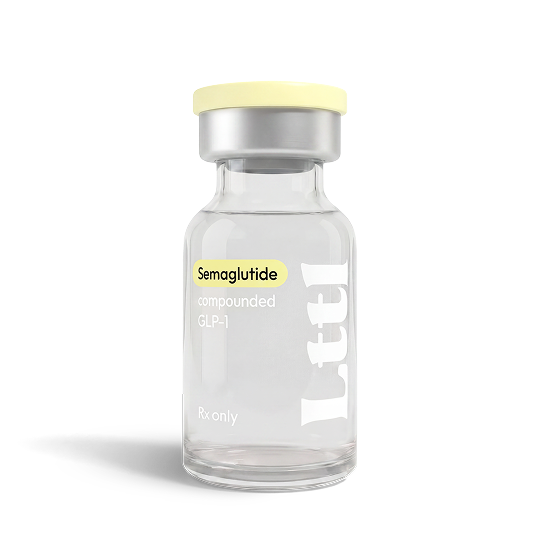
Lttl offers compounded tirzepatide for weight management. Compounded tirzepatide is not FDA-approved and has not been independently evaluated by the FDA for safety, efficacy, or quality. Lttl works exclusively with state-licensed 503A compounding pharmacies that source active pharmaceutical ingredients from FDA-registered manufacturers, and every order ships with a Certificate of Analysis verifying purity and potency.
How Does Tirzepatide Support Weight Loss?
Tirzepatide activates both GIP and GLP-1 receptors. GLP-1 receptor activation reduces appetite and calorie intake, while nonclinical evidence suggests that GIP receptor activation may contribute additional effects on food intake. The precise contribution of each receptor to tirzepatide's weight-loss effect in humans is not fully established. In a direct 72-week trial in adults with obesity without diabetes, tirzepatide produced greater average weight loss than semaglutide.
Here's how the mechanism translates to what patients actually experience:
Appetite quiets more significantly. GLP-1 receptors in brain regions involved in hunger and reward processing receive a sustained signal that reduces food noise (the persistent mental preoccupation with eating between meals). GIP receptor activation adds another layer of appetite and energy regulation that amplifies this effect. Patients on tirzepatide frequently describe a more pronounced quieting of appetite than they expected.
Digestion slows. Tirzepatide activates GLP-1 receptors in the stomach, slowing gastric emptying (how quickly food moves from the stomach into the small intestine). The prescribing label notes this effect is largest after the first dose and diminishes over time. Food sits longer, fullness extends further between meals, and hunger signals arrive later.
Blood sugar stabilizes. Tirzepatide stimulates insulin release in a glucose-dependent way through both GLP-1 and GIP receptor activation, and suppresses glucagon. The result is more stable blood sugar after meals: fewer energy crashes, and fewer of the hunger signals those crashes trigger.
Caloric intake decreases meaningfully. These effects compound each other, producing a sustained reduction in how much most patients eat. In clinical trials, that reduction translated to average weight loss outcomes that were, for many patients, previously achievable only through bariatric surgery.
For a deeper look at the science behind GLP-1 and GIP mechanisms, see our full guide to how GLP-1 medications work.
Who May Be Eligible for Tirzepatide Treatment?
Tirzepatide requires a prescription, and eligibility is determined through clinical evaluation, not a self-assessment or a checklist. That said, a few general factors commonly inform whether a patient may be a candidate.
BMI. Clinical guidelines for tirzepatide weight management programs generally follow the same criteria as other GLP-1 medications: a BMI of 30 or higher, or a BMI of 27 or higher with at least one weight-related health condition such as high blood pressure, type 2 diabetes, or elevated cholesterol.
Weight-related comorbidities. Conditions including hypertension, dyslipidemia, obstructive sleep apnea, and cardiovascular disease can support eligibility at lower BMI thresholds. Zepbound also has an FDA-approved indication for moderate to severe obstructive sleep apnea in adults with obesity.
Medical history. Zepbound is contraindicated in people with a personal or family history of medullary thyroid carcinoma (MTC), Multiple Endocrine Neoplasia syndrome type 2 (MEN2), or a previous serious hypersensitivity reaction to tirzepatide or its ingredients. Tirzepatide is not recommended in people with severe gastroparesis. A history of pancreatic, gallbladder, or significant gastrointestinal disease should be reviewed with the prescribing clinician because additional evaluation or monitoring may be appropriate.
Current medications. Patients taking insulin or sulfonylureas need clinical guidance on dose adjustments to manage hypoglycemia risk; the combination increases it meaningfully. Patients on oral medications with narrow therapeutic windows need absorption timing reviewed since tirzepatide slows gastric emptying. Patients using oral hormonal contraceptives should switch to a non-oral method or add a barrier method for four weeks after starting tirzepatide and for four weeks after each dose increase.
Pregnancy or plans to conceive. Tirzepatide may cause fetal harm based on animal studies. It should be discontinued when pregnancy is recognized, and patients planning to conceive should discuss timing with their clinician.
Age. Zepbound is currently approved for adults only. Lttl's programs are for adults.
Eligibility is ultimately a clinical determination made by a licensed clinician who reviews your complete health history. The Lttl intake process is designed to surface the information that evaluation requires.
What Results Can You Expect With Tirzepatide?
The evidence base for tirzepatide weight loss is among the strongest ever produced in obesity medicine. In the SURMOUNT-1 trial (conducted in adults with obesity or overweight without diabetes), participants on tirzepatide 15 mg weekly lost an average of approximately 22.5% of their body weight over 72 weeks. In SURMOUNT-2, conducted in adults with type 2 diabetes, average weight loss on the 15 mg dose was approximately 15.7% over the same period.
Those are averages across large trial populations, and individual results ranged widely. Several factors can influence how any individual responds: the dose reached and maintained, adherence, baseline health and metabolic status, protein intake, physical activity, sleep quality, and whether other medical conditions or medications are affecting metabolism.
The timeline matters as much as the endpoint. Some effects on appetite may occur early in treatment, but both appetite response and weight loss vary considerably between individuals. Weight reduction generally develops progressively over months as treatment is titrated and continued. Early results should not be used to predict an individual's eventual response.
Lifestyle factors remain relevant throughout. Tirzepatide creates favorable conditions (stronger appetite suppression, more stable blood sugar, reduced food preoccupation), but patients who use that window to build sustainable habits around nutrition, resistance training, and hydration tend to do better over time than those who rely on the medication alone. The SURMOUNT-4 withdrawal trial showed significant weight regain after discontinuation, which underscores how important long-term planning is from the start.
How Tirzepatide Treatment Works With Lttl
Lttl's tirzepatide treatment follows a clear, clinician-led process. Because tirzepatide's dual mechanism produces stronger appetite suppression than most patients expect and because its titration schedule can frontload some side effects, the clinical evaluation and ongoing support built into the Lttl model are essential. Here's how the treatment program breaks down.
1. Complete the free health assessment. The process begins with a comprehensive health questionnaire covering your medical history, current medications and supplements, relevant family history, and your treatment goals. It takes about two minutes. Because tirzepatide has specific contraindications, complete and accurate disclosure during intake is especially important. The answers directly affect what your clinician prescribes, at what dose, and whether tirzepatide is appropriate for you at all.
2. Clinician review. A licensed clinician reviews your intake individually: not an algorithm or a decision tree. That review looks for contraindications as well as any other factors that require additional caution. Treatment may be declined if tirzepatide isn't clinically appropriate. Lttl does not prescribe to everyone who applies ... only those who can benefit from its safe use.
3. Lab work, if indicated. Depending on your health history, your clinician may request recent lab results before finalizing your treatment plan. Metabolic panels, thyroid function tests, or other relevant markers help build a complete clinical picture. Existing results from your primary care provider can often be submitted directly.
4. Prescription and pharmacy fulfillment. When treatment is prescribed, your compounded tirzepatide is prepared by a state-licensed 503A compounding pharmacy sourcing active pharmaceutical ingredients from FDA-registered manufacturers. Your medication ships discreetly to your door, typically within one week of prescription approval, with a Certificate of Analysis included. Compounded tirzepatide comes in a multidose vial (not a pre-filled pen), so reading the included administration instructions carefully before your first injection is vital. The FDA has documented dosing errors with injectable compounded GLP-1 products tied to confusion about measuring from vials, and tirzepatide's potency makes accuracy important.
5. Ongoing monitoring and care. Tirzepatide's four-week titration schedule (faster than semaglutide's) means dose increases arrive more frequently in the early months, and each step can temporarily recreate the adjustment symptoms of the prior dose. Staying in contact with your Lttl care team throughout that process isn't just a nicety; it's how dose timing, side-effect management, and titration pace get calibrated to how you're actually responding. Unlimited care team access is included in your Lttl membership. Your price doesn't change when your dose does.
Tirzepatide Dosing and Titration
Tirzepatide dosing for weight management is individualized and involves gradual increases over time. This process is called titration, and your titration schedule is designed to give the body time to adapt at each dose level before moving higher. The standard escalation for Zepbound starts at 2.5 mg once weekly and increases in 2.5 mg increments every four weeks until a maintenance dose is reached. Maintenance doses for weight management are 5 mg, 10 mg, or 15 mg weekly, with the maximum dose being 15 mg.
Compounded tirzepatide programs, including Lttl's, follow individualized titration plans developed by your clinician based on your health history, tolerability, and treatment response. The active pharmaceutical ingredient is the same as in Zepbound, but compounded formulations and their specific dosing schedules can differ from the branded product. This is one reason ongoing clinical oversight is as important as the initial prescription.
A few principles worth understanding:
Higher doses are generally associated with greater average weight loss in clinical trials, but not every patient needs or tolerates the maximum dose. Some patients find their effective range at lower maintenance doses.
Tirzepatide's titration schedule (increasing every four weeks) is faster than semaglutide's. This can mean more pronounced early side effects for some patients, which is why starting low and moving gradually is deliberate and important.
Do not adjust your dose independently based on side effects or perceived results. Dose changes should be made only in consultation with your clinician.
Tirzepatide Side Effects and Safety
Most people who start tirzepatide experience some side effects, particularly in the early weeks of treatment. The majority are gastrointestinal and manageable, but some symptoms require prompt medical attention.
| Common Side Effects | Serious Symptoms - Seek Prompt Care |
|---|---|
| Nausea (~25-29% in SURMOUNT trials) | Severe or persistent abdominal pain, especially radiating to the back (possible pancreatitis) |
| Constipation (~11-17%) | Upper right abdominal pain, fever, or jaundice (possible gallbladder disease) |
| Diarrhea (~19-23%) | Signs of a serious allergic reaction: swelling of face, lips, tongue or throat; difficulty breathing |
| Vomiting (~8-13%) | Rapid or irregular heartbeat at rest |
| Abdominal pain (~9-10%) | Vision changes in patients with type 2 diabetes |
| Fatigue (~5-7%) | Persistent vomiting with inability to keep fluids down |
| Hair loss (~4-5%) | Neck lump, hoarseness, or difficulty swallowing (possible thyroid tumor) |
| Injection site reactions (~6-8%) |
Zepbound carries a boxed warning for a potential risk of thyroid C-cell tumors based on animal studies. Human relevance has not been established, but tirzepatide is contraindicated in patients with a personal or family history of medullary thyroid carcinoma (MTC) or MEN2.
If you are scheduled for surgery or another procedure requiring general anesthesia or deep sedation, tell the medical team that you take tirzepatide. Tirzepatide delays stomach emptying, and rare cases of aspiration have been reported during procedures.
Practical management for common side effects include eating smaller meals more slowly, avoiding high-fat or heavily spiced food early in treatment, staying upright after eating, prioritizing hydration, and maintaining adequate protein and electrolyte intake throughout.
For a complete guide to managing tirzepatide side effects and understanding the full safety profile, see our dedicated tirzepatide side effects article.
How Much Does Tirzepatide Treatment Cost?
The cost of tirzepatide treatment depends on several variables: brand-name or compounded medication, insurance coverage, the pharmacy dispensing the medication, dose, and what your telehealth provider includes in their quoted price.
Brand-name Zepbound lists at over $1,000 per month without insurance. Insurance coverage for weight management indications is inconsistent: many plans exclude it, and prior authorization is commonly required even when coverage exists in principle. Compounded tirzepatide is available at meaningfully lower price points through telehealth providers, though what's included in that price varies significantly from one provider to the next.
Lttl's compounded tirzepatide is currently available at $139 per month, all-inclusive. That price covers medication, clinician oversight, unlimited care team access, dose adjustments, and shipping. There are no separate consultation fees, per-shipment charges, or surprise costs when your dose changes.
Compounded tirzepatide is not FDA-approved and has not been independently evaluated by the FDA for safety, efficacy, or quality. For a full breakdown of how GLP-1 medication costs vary and what to ask before choosing a provider, see our GLP-1 cost and access guide.
Tirzepatide vs Other GLP-1 Treatment Options
Tirzepatide is one of two GLP-1 medications most commonly used for weight management. The other is semaglutide, which activates GLP-1 receptors only. The dual GLP-1/GIP mechanism of tirzepatide is the most meaningful pharmacological distinction between the two, and it shapes the clinical picture in a few specific ways.
Mechanism. Tirzepatide activates both GLP-1 and GIP receptors. Semaglutide activates GLP-1 receptors only. The dual mechanism appears to produce stronger appetite suppression in many patients and meaningfully greater average weight loss in clinical trials.
Clinical trial averages. Tirzepatide produced approximately 22.5% average weight loss in SURMOUNT-1 (adults without diabetes, 72 weeks). Semaglutide produced approximately 15% in STEP 1 (similar population, 68 weeks). These are averages, of course. Individual results can vary considerably for both, and some patients respond better to semaglutide.
Titration pace. Tirzepatide increases every four weeks, faster than semaglutide's standard schedule. Some patients find semaglutide easier to tolerate early as a result.
Track record. Semaglutide has a longer published clinical history and more long-term safety data. Tirzepatide's evidence base is strong and rapidly growing.
Right fit. Neither medication is universally better. The right choice depends on your health history, treatment goals, tolerability, and clinician assessment.
For a detailed side-by-side comparison, see our semaglutide vs. tirzepatide guide.
Frequently Asked Questions About Tirzepatide
How Long Does It Take for Tirzepatide to Work?
Appetite changes (quieter food noise, earlier satiety, reduced cravings) often appear within the first one to two weeks. Measurable fat loss typically becomes consistent around months two and three as titration progresses and a sustained caloric deficit develops. SURMOUNT trials ran 72 weeks to capture the full trajectory of treatment. The first month is an adjustment period, not a representative sample of what tirzepatide can do.
How Long Do You Have to Take Tirzepatide?
GLP-1 therapy is generally framed as a long-term treatment rather than a short course. The SURMOUNT-4 withdrawal trial showed significant weight regain after discontinuation. Patients who stopped tirzepatide regained a substantial portion of their lost weight over the following months, while those who continued treatment maintained or increased their loss. This doesn't mean treatment is indefinite for everyone, but it does mean that planning for ongoing use (and discussing the long-term picture with your clinician before you start) tends to produce more realistic expectations than treating it as a temporary intervention.
Can I Switch From Semaglutide to Tirzepatide?
Yes. Some patients switch because they've plateaued on semaglutide, aren't tolerating it well, or their clinician recommends a change based on their progress. Transitions between medications should be managed clinically (including decisions about timing and starting dose) rather than made independently. If you're considering a switch, raise the issue with your Lttl care team rather than changing medications on your own.
What Happens if Tirzepatide Isn't Working for Me?
If you're not seeing meaningful progress after reaching a stable maintenance dose for an appropriate period, the right step is a clinical reassessment, not an independent dose increase. Your clinician can review adherence, dietary intake, activity, dose tolerability, and whether underlying factors such as other medications, medical conditions, or sleep quality may be affecting your response. Tirzepatide doesn't work identically for everyone, and a structured review often identifies something actionable.
Is Compounded Tirzepatide the Same as Zepbound?
They share the same active pharmaceutical ingredient, but they are not the same product. Brand-name Zepbound is FDA-approved after clinical trials evaluating its safety, efficacy, and quality. Compounded tirzepatide is prepared by licensed pharmacies and is not FDA-approved, meaning it has not been independently evaluated by the FDA. The quality of compounded tirzepatide depends on the pharmacy producing it and the clinical oversight of the prescribing provider. Lttl uses state-licensed 503A compounding pharmacies sourcing active pharmaceutical ingredients from FDA-registered manufacturers, with Certificates of Analysis provided for every order.
Is Tirzepatide Available Through Telehealth?
Yes. Telehealth has made tirzepatide meaningfully more accessible for patients who don't have a local obesity medicine specialist or whose schedule makes repeated office visits impractical. The key is finding a provider where a licensed clinician genuinely reviews your case, not one that processes prescriptions automatically. Lttl's model is built around real clinician evaluation: no prescription is written until a licensed clinician has reviewed your health history and determined that treatment is clinically appropriate. From there, your medication ships to your door and your care team remains available throughout your program.
Bibliography
- Eli Lilly and Company. (2026). Zepbound (tirzepatide) injection, for subcutaneous use: Full prescribing information (Revised January 2026). U.S. Food and Drug Administration. https://www.accessdata.fda.gov/drugsatfda_docs/label/2026/217806s002lbl.pdf
- Jastreboff, A. M., Aronne, L. J., Ahmad, N. N., Wharton, S., Connery, L., Alves, B., Kiyosue, A., Zhang, S., Liu, B., Bunck, M. C., & Stefanski, A. (2022). Tirzepatide once weekly for the treatment of obesity. New England Journal of Medicine, 387(3), 205-216. https://www.nejm.org/doi/full/10.1056/NEJMoa2206038
- Garvey, W. T., Frias, J. P., Jastreboff, A. M., le Roux, C. W., Sattar, N., Aizenberg, D., Ye, J., Kwan, A., Liu, B., & Bunck, M. C. (2023). Tirzepatide once weekly for the treatment of obesity in people with type 2 diabetes (SURMOUNT-2): A double-blind, randomised, multicentre, placebo-controlled, phase 3 trial. The Lancet, 402(10402), 613-626. https://www.thelancet.com/journals/lancet/article/PIIS0140-6736(23)01200-X/fulltext
- Drucker, D. J. (2022). GLP-1 physiology informs the pharmacotherapy of obesity. Molecular Metabolism, 57, 101351. https://pubmed.ncbi.nlm.nih.gov/34626851/
- Frias, J. P., Davies, M. J., Rosenstock, J., Perez Manghi, F. C., Fernandez Lando, L., Bergman, B. K., Liu, B., Cui, X., & Brown, K. (2021). Tirzepatide versus semaglutide once weekly in patients with type 2 diabetes. New England Journal of Medicine, 385(6), 503-515. https://www.nejm.org/doi/full/10.1056/NEJMoa2107519
- U.S. Food and Drug Administration. (2025). FDA's concerns with unapproved GLP-1 drugs used for weight loss. https://www.fda.gov/drugs/postmarket-drug-safety-information-patients-and-providers/fdas-concerns-unapproved-glp-1-drugs-used-weight-loss



.svg)

.svg)