


Semaglutide and Ozempic aren't two separate things. Ozempic is a brand name. Semaglutide is the active ingredient inside it. So, if you're looking for a comparison to tell you which is better, it's a bit like asking whether ibuprofen or Advil works best for a headache. What people are usually trying to understand when they search this comparison is something more practical: what semaglutide products are available, which one is right for their situation, and whether there are more affordable ways to access the same active ingredient. This article addresses all of that.
Semaglutide vs. Ozempic: Quick Comparison
| Semaglutide (active ingredient) | Ozempic (brand name) | |
|---|---|---|
| What it is | Active pharmaceutical ingredient: a GLP-1 receptor agonist | Brand-name product containing semaglutide, manufactured by Novo Nordisk |
| Mechanism | GLP-1 receptor agonist | Same: Ozempic's mechanism is semaglutide's mechanism |
| FDA-approved indications | Varies by product; approved uses include type 2 diabetes, chronic weight management, cardiovascular risk reduction, and MASH depending on formulation and dose | Type 2 diabetes (glycemic control); cardiovascular risk reduction in adults with type 2 diabetes and established CV disease |
| Approved for weight loss | Yes, when formulated as Wegovy at weight management doses | No, Ozempic is not approved for weight loss |
| Dosing frequency | Varies by product and formulation. Wegovy injection is once weekly; Wegovy tablets are once daily. Ozempic and Rybelsus formulations have their own product-specific dosing schedules. | Once weekly subcutaneous injection |
| Maintenance dose range | Varies: 0.5-2 mg (Ozempic); 1.7-2.4 mg, up to 7.2 mg (Wegovy); 25 mg daily (Rybelsus) | 0.5 mg, 1 mg, or 2 mg weekly |
| Common side effects | Nausea, diarrhea, vomiting, constipation, abdominal pain | Nausea, diarrhea, vomiting, constipation, abdominal pain |
| Boxed warning | Thyroid C-cell tumor risk (all semaglutide products) | Same boxed warning |
| Key evidence | STEP trials (weight management); SUSTAIN trials (diabetes); SELECT (CV outcomes) | SUSTAIN trials; cardiovascular outcomes data |
| Access | Prescription required regardless of formulation or brand | Prescription required; generally covered for type 2 diabetes |
What Is Semaglutide?
Semaglutide is an active pharmaceutical ingredient: a GLP-1 (glucagon-like peptide-1) receptor agonist that mimics a hormone your body naturally produces after eating. It signals satiety to the brain, slows gastric emptying, stimulates glucose-dependent insulin release, and suppresses glucagon. It is not a brand name and not a finished product by itself. It's the molecule that multiple branded and compounded products are built around.
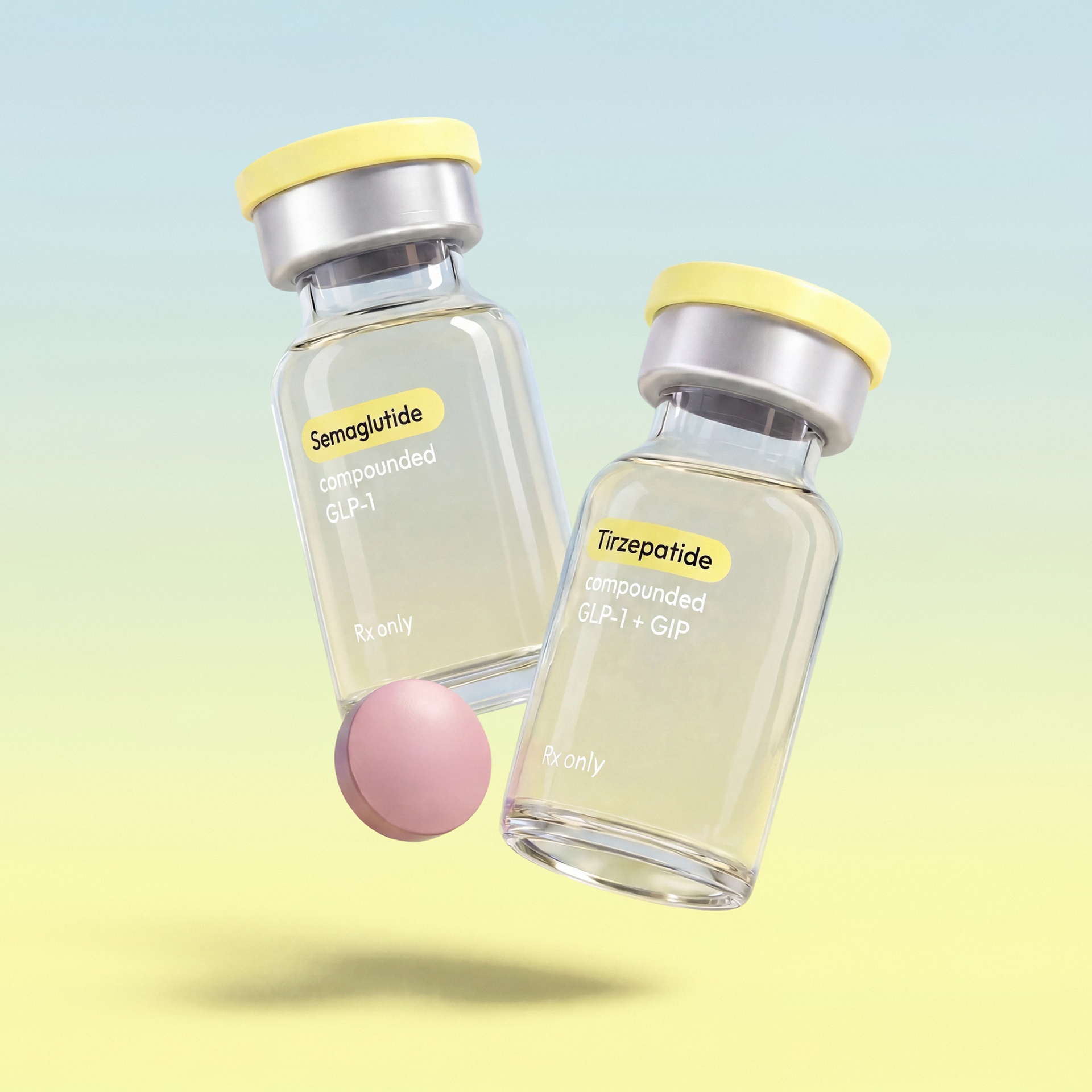
Novo Nordisk has developed three FDA-approved brand-name products containing semaglutide: Ozempic (once-weekly injection for type 2 diabetes), Wegovy (once-weekly injection or daily oral tablet for chronic weight management and other indications), and Rybelsus (once-daily oral tablet for type 2 diabetes). Each carries different approved indications, doses, and prescribing contexts. Compounded semaglutide (prepared by licensed pharmacies using the same active ingredient) is a fourth category of product, available through telehealth providers for weight management.
What Is Ozempic?
Ozempic is a brand name manufactured by Novo Nordisk. Its active ingredient is semaglutide. It is approved as an adjunct to diet and exercise to improve glycemic control in adults with type 2 diabetes, and for reducing the risk of major cardiovascular events (cardiovascular death, nonfatal heart attack, and nonfatal stroke) in adults with type 2 diabetes and established cardiovascular disease.
Semaglutide is available in several FDA-approved products and formulations, including injectable and oral formulations. Wegovy is available as a once-weekly injection and a once-daily tablet for its approved weight-management and cardiovascular indications. Ozempic is available in injectable and oral formulations for approved type 2 diabetes indications. Rybelsus is an oral semaglutide product for type 2 diabetes. These products have different strengths, dosing schedules, indications, and administration instructions and should not be treated as interchangeable.
Ozempic is not FDA-approved for weight management. When patients or clinicians refer to using Ozempic for weight loss, that's off-label prescribing: a legitimate clinical judgment in some contexts, but a meaningful regulatory distinction. The FDA-approved weight management product containing semaglutide is Wegovy, not Ozempic.
How Do Semaglutide and Ozempic Work?
Since Ozempic contains semaglutide, the mechanism is the same. The question folks usually ask here is how different semaglutide products compare, and what the active ingredient actually does in the body.
What semaglutide does, regardless of which product it's in:
Activates GLP-1 receptors in the brain, reducing food noise (the persistent mental preoccupation with eating that drives habitual and compulsive food intake)
Activates GLP-1 receptors in the stomach, slowing gastric emptying and extending fullness between meals
Stimulates insulin release from the pancreas in a glucose-dependent way, and suppresses glucagon, reducing blood sugar spikes after meals
Produces appetite suppression and, at sufficient doses, meaningful weight loss as a result of reduced caloric intake
How the clinical experience differs across semaglutide products:
The dose determines the magnitude of effect. Ozempic's diabetes doses (0.5-2 mg) produce meaningful GI effects and some appetite suppression, but are optimized for glycemic control rather than maximum weight loss. Wegovy's 2.4 mg maintenance dose (and the newer 7.2 mg HD formulation) produce significantly stronger appetite suppression and greater weight loss
Compounded semaglutide, when prescribed for weight management, typically follows a titration schedule similar to Wegovy's, targeting the same weight management dose range
The oral tablet formulation (Rybelsus, Wegovy tablet) works through the same mechanism but has different absorption characteristics and administration requirements than the injectable forms
How Do Weight Loss Results Compare?
The weight loss results from semaglutide depend heavily on which product is used and at what dose. Comparing Ozempic to Wegovy, for example, is really a comparison of lower doses to higher doses of the same molecule.
| Trial | Product/Dose | Population | Duration | Weight Loss Outcome |
|---|---|---|---|---|
| STEP 1 | Wegovy 2.4 mg weekly | Adults with obesity or overweight, no diabetes | 68 weeks | ~15% body weight |
| STEP 2 | Wegovy 2.4 mg weekly | Adults with obesity/overweight and type 2 diabetes | 68 weeks | ~9.6% body weight |
| STEP 8 | Wegovy 2.4 mg vs. liraglutide 3 mg | Adults with obesity, no diabetes | 68 weeks | ~15.8% (Wegovy) vs. ~6.4% (liraglutide) |
| SELECT | Wegovy 2.4 mg weekly | Adults with obesity/overweight and established CV disease | ~40 months | ~9.4% body weight |
| SUSTAIN 1-7 | Ozempic 0.5-1 mg weekly | Adults with type 2 diabetes | 30-56 weeks | ~3-6 kg reduction (not primary endpoint) |
The weight loss difference between Ozempic and Wegovy in practice is primarily a dose effect. Wegovy is designed to reach 2.4 mg (and now up to 7.2 mg) producing strong appetite suppression and a meaningful caloric deficit. Ozempic's diabetes doses produce some weight loss as a secondary effect, but the magnitude is considerably more modest. This is why patients who switch from Ozempic to Wegovy (or to a compounded semaglutide program targeting weight management doses) often experience more pronounced weight loss: the active ingredient hasn't changed, but the dose has.
Side Effects and Safety Differences
Because all semaglutide products share the same active ingredient and mechanism, the side effect profile and major safety warnings are consistent from one to another. Differences in clinical experience relate primarily to dose (higher doses produce more pronounced GI effects) and formulation, since the oral tablet has specific administration requirements that injectable forms don't.
| Semaglutide (all products) | Ozempic specifically | |
|---|---|---|
| Most common GI effects | Nausea, diarrhea, vomiting, constipation, abdominal pain | Same; rates at 0.5-2 mg lower than at Wegovy's weight management doses |
| Severe GI reactions | Severe GI reactions reported postmarketing across semaglutide products | October 2025 label update added specific severe GI adverse reactions warning |
| Thyroid C-cell tumor warning | Boxed warning across all semaglutide products; contraindicated in MTC/MEN2 history | Same boxed warning |
| Pancreatitis | Acute pancreatitis observed; discontinue if suspected | Same warning |
| Gallbladder disease | Cholelithiasis and cholecystitis reported | Same warning |
| Diabetic retinopathy | Worsening observed with rapid glucose improvement; monitor patients with history | Particularly relevant given Ozempic's diabetes population |
| Suicidal behavior and ideation | Warning removed from Wegovy label January 2026; same FDA review applies to Ozempic | Warning removed following FDA review |
| Hypoglycemia risk | Low when used alone; higher with insulin or sulfonylureas | Higher in diabetes context due to concomitant glucose-lowering medications |
| Oral contraceptive interaction | Wegovy tablet may reduce efficacy; switch or add barrier method | Injection form; general gastric emptying effects on oral medication absorption apply |
| Hair loss | ~3% in Wegovy trials; associated with weight loss rather than direct drug effect | Less data at diabetes doses; same association expected |
| Pregnancy | Discontinue at least 2 months before planned pregnancy | Same guidance |
The most clinically significant practical difference between Ozempic and higher-dose semaglutide products is nausea intensity, which is dose-related. Patients starting at Wegovy's weight management doses (or compounded semaglutide programs targeting those doses) should expect more pronounced early GI side effects than patients on Ozempic's diabetes doses.
Dosing, Administration and Treatment Experience
Ozempic is a once-weekly subcutaneous injection. It starts at 0.25 mg for four weeks, then moves to 0.5 mg as an initial maintenance dose, with optional increases to 1 mg and then 2 mg based on glycemic response.
Wegovy follows a longer titration to higher doses. Starting at 0.25 mg, it moves through 0.5 mg, 1 mg, and 1.7 mg before reaching 2.4 mg maintenance over approximately 16 weeks. The HD formulation allows further titration to 7.2 mg.
Compounded semaglutide for weight management typically follows a titration schedule similar to Wegovy's, targeting weight management dose levels under clinician guidance.
The Wegovy oral tablet (25 mg daily) requires specific administration that doesn't apply to injectable forms. It should be taken on an empty stomach in the morning with up to four ounces of plain water, at least 30 minutes before any food, drink, or other oral medications.
Missed dose guidance is the same for both Ozempic and Wegovy injections. If the next scheduled dose is more than two days away, take the missed dose as soon as possible. If it's within two days, skip it and resume the regular schedule. Do not take two doses within three days of each other.
Monitoring differs by indication. Ozempic patients with type 2 diabetes require blood glucose monitoring and attention to hypoglycemia risk with concomitant medications. Weight management patients on Wegovy or compounded semaglutide are monitored primarily for GI tolerability, hydration, nutrition, and weight-related outcomes.
Cost, Insurance and Availability
The cost of semaglutide treatment depends on which product is involved, whether insurance covers it, which pharmacy dispenses it, and what dose is prescribed. Brand-name products are expensive without coverage: Ozempic and Wegovy both list at over $1,000 per month depending on dose and formulation.
Insurance coverage differs significantly by indication. Ozempic is more reliably covered because it's prescribed for type 2 diabetes (an indication most plans recognize). Wegovy, prescribed for weight management, is excluded from many formularies despite FDA approval, and prior authorization is commonly required for both. The Medicare GLP-1 Bridge program, which began July 1, 2026, allows eligible Part D beneficiaries access to certain GLP-1 medications for weight management, including Wegovy, through December 31, 2027.
Lttl: A More Affordable Alternative for Weight Management
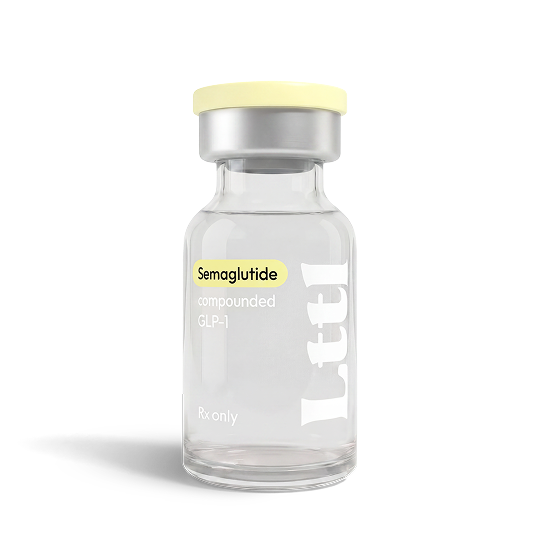
For patients whose goal is weight management and who aren't adequately covered by insurance, compounded semaglutide offers a significantly more affordable path to the same active ingredient. Lttl currently offers compounded semaglutide at $89 per month, all-inclusive. That monthly price covers medication, licensed clinician oversight, unlimited care team access, dose adjustments, and shipping. There are no hidden fees, and your price doesn't change as your dose increases.
Compounded semaglutide is not FDA-approved and has not been independently evaluated by the FDA for safety, efficacy, or quality. Lttl works exclusively with state-licensed 503A compounding pharmacies sourcing active pharmaceutical ingredients from FDA-registered manufacturers. Every order ships with a Certificate of Analysis verifying purity and potency.
Which May Be More Appropriate: Semaglutide (as Wegovy) or Ozempic?
The comparison most people are actually making here is between Ozempic for diabetes and a weight management semaglutide program, be it Wegovy or compounded semaglutide. A few factors that typically inform that determination:
Primary clinical goal. If the goal is glycemic control in type 2 diabetes, Ozempic is the appropriate FDA-approved product. If the goal is chronic weight management, Wegovy or compounded semaglutide at weight management doses is the right clinical path.
Whether you have type 2 diabetes. Patients with both type 2 diabetes and obesity may be candidates for either product depending on which clinical goal is primary: a conversation worth having with a clinician rather than deciding independently.
Dose and expected weight loss. The weight loss difference between Ozempic's diabetes doses and Wegovy's weight management doses is primarily a dose effect. Patients who want maximum weight loss benefit from semaglutide need to be on doses that are closer to Wegovy's range, not Ozempic's.
Cardiovascular history. Ozempic has a cardiovascular outcomes indication for adults with type 2 diabetes and established CV disease. Wegovy has a separate cardiovascular outcomes indication for adults with obesity or overweight and established CV disease, a different population without the diabetes requirement.
Adolescent patients. Wegovy is approved for patients aged 12 and older with obesity. Ozempic is not approved for pediatric use.
Oral administration preference. Wegovy offers a once-daily oral tablet. Ozempic is injection-only. For patients who strongly prefer not to inject, this may influence the decision.
Insurance and cost. Coverage realities often shape what's practically accessible. For patients without adequate coverage for either brand-name product, compounded semaglutide through a clinician-supervised telehealth program offers access to the same active ingredient at a fraction of the cost.
The determination of which product is appropriate belongs with a licensed clinician who has reviewed your health history, current medications, clinical goals, and coverage situation.
Frequently Asked Questions
Is Semaglutide the Same Thing as Ozempic?
Semaglutide is the active ingredient; Ozempic is one of the brand-name products that contain it. They are not the same thing in the same way that ibuprofen and Advil are not the same thing: one is the molecule, the other is a specific commercial formulation of it. Other products containing semaglutide include Wegovy and Rybelsus, each with different approved indications and doses. Compounded semaglutide is also available through licensed pharmacies using the same active ingredient.
Can I Use Ozempic for Weight Loss if I Don't Have Diabetes?
Ozempic is not FDA-approved for weight loss in patients without type 2 diabetes. Some clinicians prescribe it off-label for weight management, and the mechanism that produces weight loss is the same as Wegovy's (the active ingredient is identical). But the doses involved matter significantly. Ozempic's diabetes doses produce more modest weight loss than Wegovy's weight management doses. For patients seeking GLP-1 therapy primarily for weight loss, Wegovy or compounded semaglutide at weight management doses is the more appropriate clinical path to discuss with a prescriber.
What Is the Difference Between Ozempic and Wegovy?
Both contain semaglutide, but they are different products approved for different indications at different doses. Ozempic is approved for type 2 diabetes at doses up to 2 mg weekly. Wegovy is approved for chronic weight management at doses up to 2.4 mg weekly, with a higher-dose HD formulation up to 7.2 mg, and also as a daily oral tablet. Wegovy also has an approved cardiovascular outcomes indication for patients with obesity or overweight and established CV disease. They are not interchangeable.
Can I Switch From Ozempic to a Weight Management Semaglutide Program?
Switching from Ozempic to Wegovy or a compounded semaglutide weight management program is possible and may make clinical sense if weight management becomes the primary treatment goal. Because the active ingredient is the same, the transition is generally more straightforward than switching between different active ingredients, but dose adjustments and titration considerations still require clinical guidance. The switch should be made in consultation with a prescriber rather than independently.
Is Compounded Semaglutide the Same as Ozempic or Wegovy?
Compounded semaglutide uses the same active pharmaceutical ingredient but is not FDA-approved and has not been independently evaluated by the FDA for safety, efficacy, or quality. It is prepared by licensed compounding pharmacies rather than manufactured by Novo Nordisk. The quality of compounded semaglutide depends on the pharmacy and the clinical program. Lttl uses state-licensed 503A pharmacies sourcing from FDA-registered manufacturers, with a Certificate of Analysis for every order, and compounded semaglutide is currently available through Lttl at $89 per month, all-inclusive.
Bibliography
- Novo Nordisk. (2026). Wegovy (semaglutide) injection and tablets: Full prescribing information (Revised March 2026). U.S. Food and Drug Administration. https://nctr-crs.fda.gov/fdalabel/services/spl/set-ids/ee06186f-2aa3-4990-a760-757579d8f77b/spl-doc?hl=wegovy
- Novo Nordisk. (2025). Ozempic (semaglutide) injection, for subcutaneous use: Full prescribing information (Revised October 2025). U.S. Food and Drug Administration. https://nctr-crs.fda.gov/fdalabel/services/spl/set-ids/42bdd912-2393-44c4-b7e0-47672ca28991/spl-doc?hl=ozempic
- Wilding, J. P. H., Batterham, R. L., Calanna, S., Davies, M., Van Gaal, L. F., Lingvay, I., McGowan, B. M., Rosenstock, J., Tran, M. T. D., Wadden, T. A., Wharton, S., Yokote, K., Zeuthen, N., & Kushner, R. F. (2021). Once-weekly semaglutide in adults with overweight or obesity. New England Journal of Medicine, 384(11), 989-1002. https://www.nejm.org/doi/full/10.1056/NEJMoa2032183
- Rubino, D. M., Greenway, F. L., Khalid, U., O'Neil, P. M., Rosenstock, J., Sørrig, R., Wadden, T. A., Wizert, A., & Garvey, W. T. (2022). Effect of weekly subcutaneous semaglutide vs daily liraglutide on body weight in adults with overweight or obesity without diabetes: The STEP 8 randomized clinical trial. JAMA, 327(2), 138-150. https://pubmed.ncbi.nlm.nih.gov/35015037/
- Lincoff, A. M., Brown-Frandsen, K., Colhoun, H. M., Deanfield, J., Emerson, S. S., Esbjerg, S., Hardt-Lindberg, S., Hovingh, G. K., Kahn, S. E., Kushner, R. F., Lingvay, I., Oral, T. K., Michelsen, M. M., Plutzky, J., Tornøe, C. W., & Ryan, D. H. (2023). Semaglutide and cardiovascular outcomes in obesity without diabetes. New England Journal of Medicine, 389(24), 2221-2232. https://www.nejm.org/doi/full/10.1056/NEJMoa2307563
- Drucker, D. J. (2022). GLP-1 physiology informs the pharmacotherapy of obesity. Molecular Metabolism, 57, 101351. https://pubmed.ncbi.nlm.nih.gov/34626851/