
.svg)



By Michael Wright
Most people who look into telehealth weight management for the first time have the same question underneath whatever they’re actually typing into the search bar: Is this real medicine, or is it just a website that mails me something?
And, let’s face it, the telehealth space has expanded fast enough that the range of what’s out there, from genuinely rigorous clinical programs to essentially automated vending machines for injectable medications, is pretty wide. Understanding what a legitimate process actually looks like is the fastest way to tell the difference.
Here’s how the Lttl intake and care process works, from the first question you answer to the ongoing support that comes after your medication arrives.
The Short Version
Getting started with Lttl involves four stages: a comprehensive digital health intake, a clinician review of your medical history and any relevant lab work, a customized treatment plan developed around your specific profile, and ongoing clinical support as your protocol progresses. Nothing is prescribed automatically. A licensed clinician reviews every case individually before any medication is recommended, and that review includes the option to decline treatment if it isn’t appropriate.
Step 1: Digital Health Intake and Medical History
At Lttl, the intake process is quick and easy ... but that doesn’t mean it’s not taken very seriously. After all, any checkout flow that asks for your credit card before it asks about your health history is telling you something important about how that program is run.
Our free, two-minute assessment is designed to give your licensed clinician a clear view of your medical background and help us better understand your goals. Though it’s not a laborious intake form, it is a thorough one whose answers genuinely affect what gets prescribed, at what dose, and whether a GLP-1 medication is appropriate for you at all.
A few things the intake specifically screens for: a personal or family history with contraindications for GLP-1 medications; current use of medications that interact with semaglutide or tirzepatide; and conditions that might make a different treatment approach more appropriate than GLP-1 therapy.
If you’re wondering whether the questionnaire actually gets read by a human, it most certainly does. That’s Step 2.
Step 2: Clinician Review and Lab Evaluation
This is the step that separates legitimate telehealth from the algorithmic prescribing that gives the industry a bad reputation. Every intake at Lttl is reviewed by a licensed clinician, and not processed by a decision tree that outputs a prescription based on checkbox responses. The clinician reviews your complete health history, evaluates whether GLP-1 therapy is medically appropriate for your situation, and identifies any factors that warrant additional caution, further evaluation, or a different approach entirely.
The clinician review also covers dosing. GLP-1 medications are titrated upward over time (starting low and increasing gradually) and the appropriate starting point and titration schedule can vary based on individual health factors. A patient with a history of significant GI sensitivity, for example, may benefit from a slower titration than the standard protocol. That kind of individualization requires a clinician making a judgment, not a system following a fixed algorithm.
Step 3: Treatment Plan and Pharmacy Fulfillment
Once the clinician review is complete and treatment is determined to be appropriate, a customized protocol is developed and sent to the pharmacy.
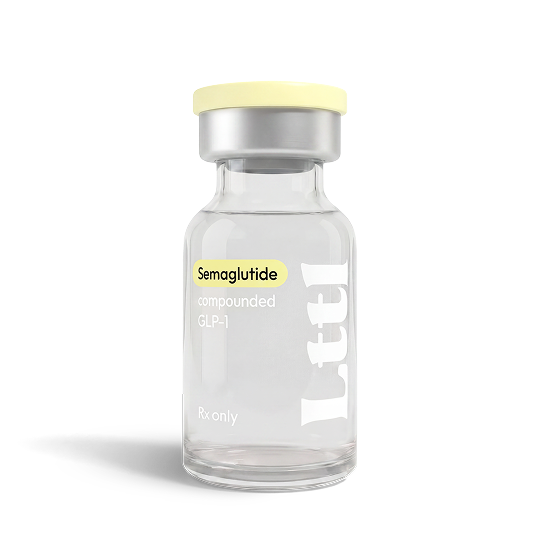
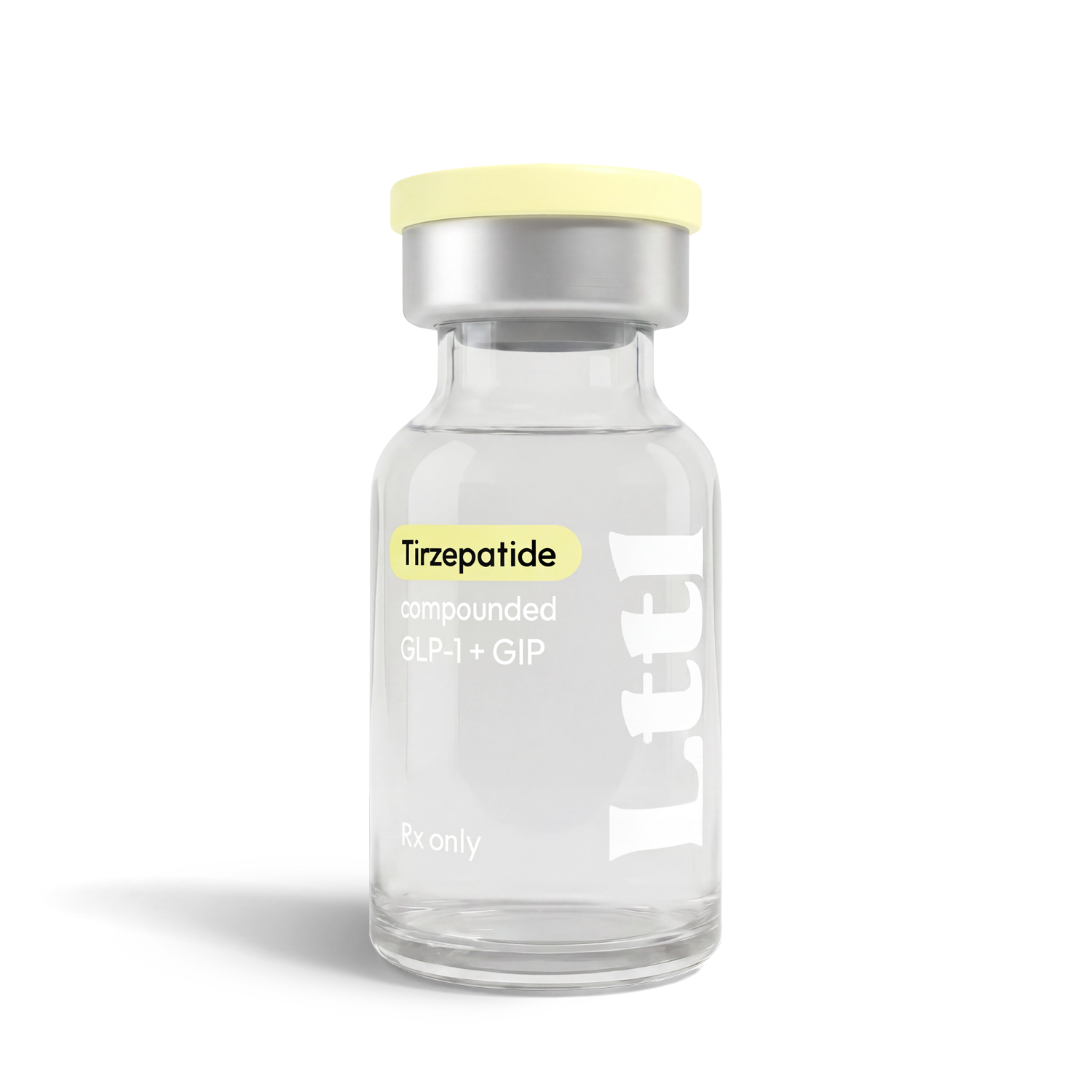
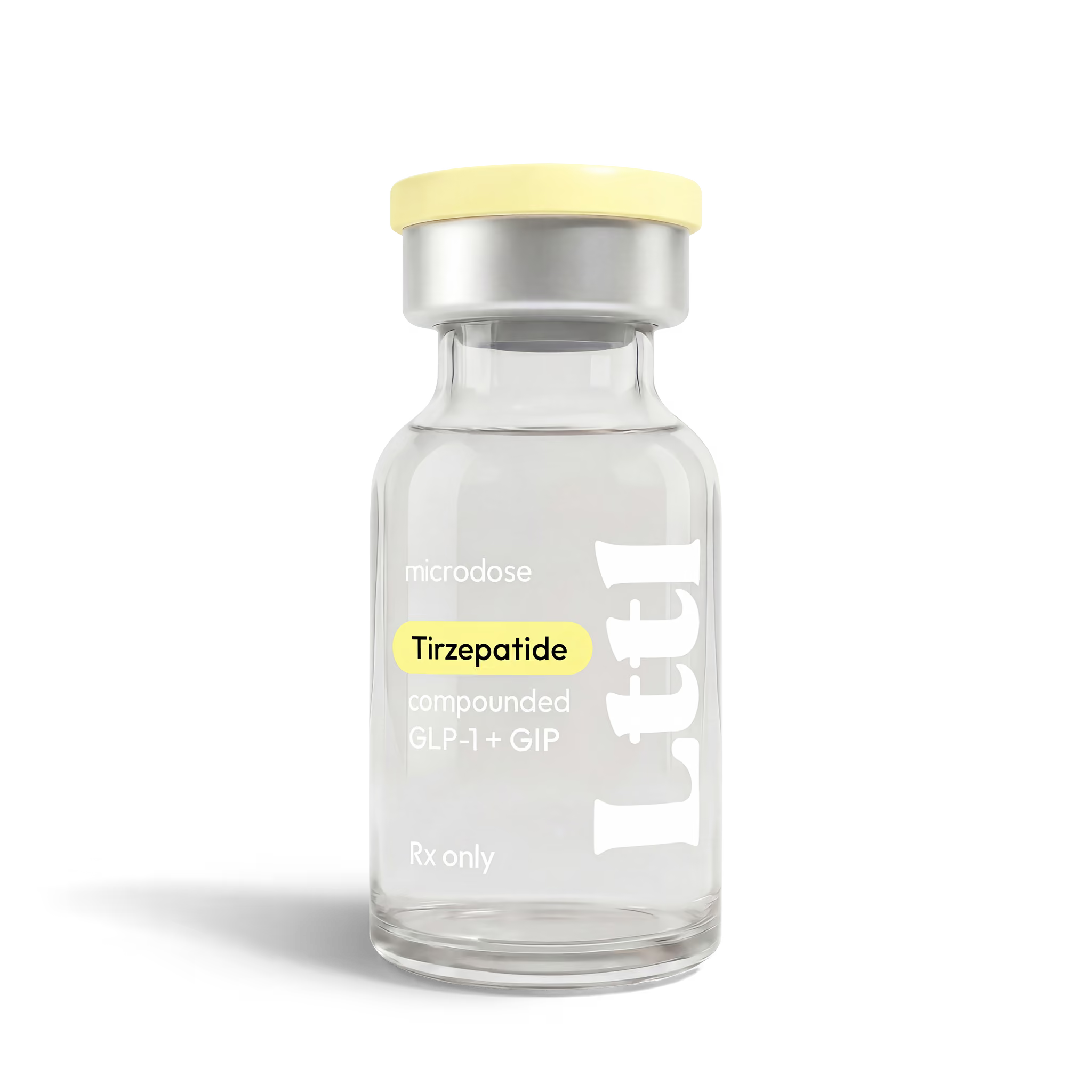
Lttl works exclusively with state-licensed 503A compounding pharmacies that source their active pharmaceutical ingredients from FDA-registered manufacturers. Compounded semaglutide and tirzepatide are not FDA-approved medications* (they haven't been independently evaluated by the FDA for safety, efficacy, or quality) and Lttl is transparent about that. What the pharmacy partnership does provide is a documented supply chain: every medication ships with a Certificate of Analysis verifying the purity and potency of what’s in the vial.
Packaging is discreet. There’s nothing on the outside of the box that identifies the contents or the sender, which matters to a lot of patients and is worth stating plainly rather than leaving people to wonder.
Delivery timelines vary depending on pharmacy processing and shipping, but most patients receive their first shipment within a week of prescription approval. Instructions for storage and administration come with the medication, and the care team is available if anything about the delivery or the contents raises a question.
One thing worth knowing before that first shipment arrives: the instructions matter. The dosing errors that have been documented with compounded injectable GLP-1s (some involving patients administering many times the intended dose) trace almost entirely to confusion about how to measure and administer from a multidose vial. Reading the instructions carefully, and reaching out to the care team with any questions before the first injection, is worth the few extra minutes it takes.
Step 4: Ongoing Support and Dose Titration
The first shipment isn’t the end of the process. It’s closer to the beginning.
GLP-1 therapy is a long-term commitment for most patients, and what happens after the medication arrives matters as much as what happens before. Dose titration (the gradual increase from a starting dose to an effective maintenance dose) unfolds over months, not weeks, and different patients move through it at different paces based on how they’re tolerating the medication and how their body is responding.
Lttl’s membership includes unlimited access to the care team for exactly this reason. Questions about side effects, concerns about whether a dose adjustment is warranted, or simply wanting to know whether what you’re experiencing is normal: These are the kinds of things that should be answered by the clinician managing your care, not a FAQ page or an AI chat widget.
Dose adjustments are made based on clinical assessment, not a fixed schedule. If a patient is tolerating the medication well and responding appropriately, titration can proceed. If side effects are significant or response is limited, the protocol gets reassessed. That flexibility is what ongoing clinical oversight actually means in practice, as opposed to a static prescription that ships on a timer regardless of how the patient is doing. And with Lttl, your price doesn’t go up when your dosage does. You can budget for the same price, start to finish.
What Lttl patients have access to across all four steps:
| Stage | What's Included |
|---|---|
| Intake | Comprehensive health questionnaire, medication and history review |
| Clinician Review | Individual case review by a licensed clinician and dosing determination |
| Treatment & Fulfillment | Customized protocol, 503A pharmacy fulfillment, Certificate of Analysis, discreet shipping |
| Ongoing Support | Unlimited care team access, dose titration, protocol adjustments, clinical check-ins |
Frequently Asked Questions
How Does Telehealth Weight Loss Prescription Work?
Legitimate telehealth weight loss programs involve a medical intake, a clinician review of your health history, a prescription written by a licensed provider, and medication dispensed by a licensed pharmacy. The process mirrors an in-person clinical visit in its medical rigor. The difference is that it happens remotely. Programs that skip the clinician review or prescribe automatically based on questionnaire responses alone aren’t following the same standard of care.
What Does the Lttl Intake Process Involve?
The Lttl intake starts with a comprehensive health questionnaire covering your medical history, current medications, relevant family history, and health goals. That information is reviewed by a licensed clinician who determines whether GLP-1 therapy is appropriate for your specific situation. Nothing is prescribed until a clinician has reviewed your case individually.
How Long Does It Take to Get Started With Telehealth GLP-1 Treatment?
The timeline varies by patient, but most people move from intake to first delivery within one to two weeks. The clinician review typically takes one to three business days. Pharmacy processing and shipping add additional time.
Is My Medical Information Private?
Yes. Telehealth providers operating in the United States are required to comply with HIPAA, the federal law that governs the privacy and security of health information. Lttl’s intake, clinical review, and communication systems are HIPAA-compliant. Medication packaging is discreet and doesn’t identify the sender or contents on the outside of the box.
What Happens if the Clinician Decides GLP-1 Therapy Isn't Right for Me?
A clinician may determine that GLP-1 therapy isn’t appropriate based on your health history, current medications, or other factors. If that happens, you’ll receive a clear explanation of why and, where possible, guidance on alternatives or next steps. A program that approves everyone who completes an intake form isn’t doing medicine, it’s doing fulfillment. The option to decline treatment is part of what makes a clinical program legitimate.
Can I Switch From Semaglutide to Tirzepatide Through Lttl?
Yes. If your protocol needs to change (whether due to side effects, insufficient response, or a clinician recommendation), Lttl’s care team can work through that transition with you. Medication changes are managed clinically rather than processed automatically, which means the decision is based on how you’re actually doing rather than a fixed timeline.
*Compounded semaglutide and tirzepatide are not FDA-approved. FDA recommends using an FDA-approved medication when it is available and appropriate for the patient. A compounded version may be appropriate for an individual patient when an FDA-approved product cannot meet that patient’s medical needs and applicable compounding requirements are met.
Bibliography
- Tuckson, R.V., Edmunds, M., & Hodgkins, M.L. (2017). Telehealth. New England Journal of Medicine, 377(16), 1585-1592. https://www.nejm.org/doi/full/10.1056/NEJMsr1503323
- Wilding, J.P.H., Batterham, R.L., Calanna, S., Davies, M., Van Gaal, L.F., Lingvay, I., McGowan, B.M., Rosenstock, J., Tran, M.T.D., Wadden, T.A., Wharton, S., Yokote, K., Zeuthen, N., & Kushner, R.F. (2021). Once-weekly semaglutide in adults with overweight or obesity. New England Journal of Medicine, 384(11), 989-1002. https://www.nejm.org/doi/full/10.1056/NEJMoa2032183
- U.S. Food and Drug Administration. (2024). FDA alerts health care providers, compounders and patients of dosing errors associated with compounded injectable semaglutide products. https://www.fda.gov/drugs/human-drug-compounding/fda-alerts-health-care-providers-compounders-and-patients-dosing-errors-associated-compounded
- U.S. Department of Health and Human Services, Office for Civil Rights. (2023). Summary of the HIPAA privacy rule. https://www.hhs.gov/hipaa/for-professionals/privacy/laws-regulations/index.html
- Jastreboff, A.M., Aronne, L.J., Ahmad, N.N., Wharton, S., Connery, L., Alves, B., Kiyosue, A., Zhang, S., Liu, B., Bunck, M.C., & Stefanski, A. (2022). Tirzepatide once weekly for the treatment of obesity. New England Journal of Medicine, 387(3), 205-216. https://www.nejm.org/doi/full/10.1056/NEJMoa2206038



.svg)

.svg)