
.svg)




Can You Get Semaglutide Online? The Short Answer
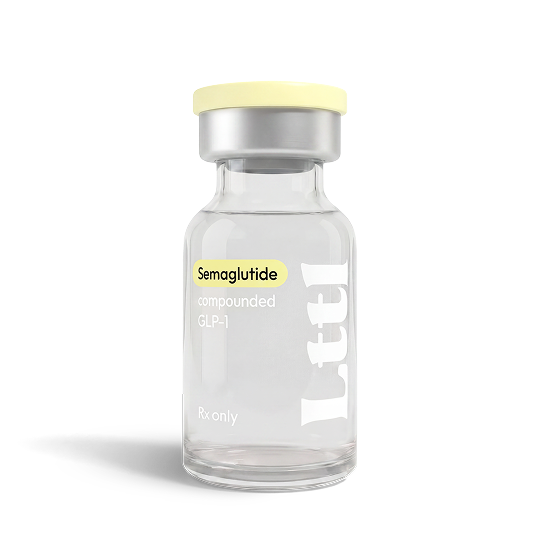
Yes. Legitimate semaglutide treatment is available through telehealth, and for many patients it's the most practical way to access GLP-1 care. But the operative word is legitimate. Semaglutide is a prescription medication, which means it requires a clinical evaluation, a licensed prescriber, and a pharmacy, regardless of whether the process happens in person or online. Telehealth changes where and how that evaluation occurs, not whether it occurs. Any provider that skips the clinical review, guarantees a prescription before assessing your health history, or ships medication without a valid prescription isn't operating within the legal or clinical standard of care. What follows is a guide to how the process works when it's done right.
How Online GLP-1 Treatment Works
A legitimate online semaglutide weight loss program mirrors the clinical rigor of an in-person visit; it just removes the need to travel to an office. Here's what a responsible process looks like from start to finish.
1. Complete a health intake. The process begins with a comprehensive health questionnaire covering your medical history, current medications and supplements, relevant family history, previous weight loss attempts, and your treatment goals. This isn't a formality. The answers directly affect what your clinician prescribes, at what dose, and whether semaglutide is appropriate for you at all.
2. Clinician review. A licensed clinician (a physician, nurse practitioner, or equivalent) reviews your intake individually. This is the step that separates a legitimate telehealth weight loss program from an automated prescription service. The clinician evaluates whether GLP-1 therapy is medically appropriate for your situation, identifies any contraindications or factors that require additional caution, and determines a starting dose and titration plan if treatment is appropriate.
3. Eligibility determination. Based on your intake and any required lab work, the clinician determines whether semaglutide treatment is right for you, including which medication and formulation makes sense given your profile. Treatment may be declined if it isn't clinically appropriate. A program that approves everyone who completes an intake form isn't practicing medicine.
4. Lab work, if needed. Depending on your health history, the clinician may request recent lab results before finalizing your treatment plan. Metabolic panels, thyroid function tests, or other relevant markers help establish a clinical picture that goes beyond what a questionnaire alone can capture.
5. Prescription authorization and pharmacy fulfillment. If treatment is prescribed, the prescription is sent to a licensed pharmacy. For compounded semaglutide programs, this means a state-licensed 503A compounding pharmacy. Your medication is prepared, verified, and shipped directly to your door: discreetly packaged, typically within a week of prescription approval.
6. Ongoing monitoring and follow-up. The process doesn't end at delivery. Dose titration, side-effect management, and clinical check-ins are part of responsible semaglutide care. Legitimate telehealth programs build this into the model rather than treating it as optional.
What Information a Clinician May Review
A thorough clinical evaluation for semaglutide requires more than a few basic health questions. Here's what a responsible intake process should cover:
Weight and BMI history. Current weight, height, and BMI are starting points, but weight history and previous attempts at treatment provide important context.
Treatment goals. How much weight loss is the patient seeking, and over what timeframe? Are there metabolic health goals beyond the number on the scale?
Relevant medical history. Conditions that affect eligibility or require monitoring include a history of pancreatitis, gallbladder disease, gastroparesis, thyroid cancer or family history of MTC/MEN2, diabetic retinopathy, and cardiovascular disease.
Current medications. Patients taking insulin or sulfonylureas face increased hypoglycemia risk. Patients on medications with narrow therapeutic windows need absorption timing reviewed. Patients using oral hormonal contraceptives need guidance on switching methods or adding a barrier method during titration.
Allergies and prior reactions. Previous hypersensitivity to semaglutide or other GLP-1 medications is a contraindication.
Pregnancy status and reproductive plans. Semaglutide should be discontinued at least two months before planned conception. Patients who are pregnant or breastfeeding are not candidates.
Prior weight loss treatments. Previous GLP-1 experience, bariatric surgery, or other weight management treatments inform the clinical picture.
Lab work, where clinically indicated. Recent metabolic panels or thyroid function tests may be requested or reviewed depending on health history.
The more complete and accurate the information provided, the more reliably a clinician can evaluate whether treatment is appropriate and safe.
How Prescriptions and Pharmacy Fulfillment Work
Once a clinician has reviewed your case and determined that semaglutide is appropriate, the prescription and fulfillment process typically works as follows:
The prescription is issued by a licensed clinician. A valid prescription requires a legitimate prescriber-patient relationship, which is why the clinical intake matters. In telehealth, that relationship is established through the evaluation process rather than an in-person visit.
The prescription is sent to a licensed pharmacy. For compounded semaglutide programs, this is a state-licensed 503A compounding pharmacy. Reputable providers identify their pharmacy partners and can confirm licensing.
The medication is prepared with documented quality standards. Responsible compounding pharmacies source active pharmaceutical ingredients from FDA-registered manufacturers and provide a Certificate of Analysis (COA) for each batch, verifying purity and potency. You should be able to access your COA.
Packaging is discreet. Nothing on the outside of the package identifies the contents or the sender: a standard practice for telehealth medication delivery that most patients appreciate.
Delivery typically takes one week from prescription approval. Timelines can vary based on pharmacy processing and shipping, but most patients receive their first shipment within that window.
Instructions for storage and administration are included. For compounded injectable products, follow the pharmacy's storage and administration instructions carefully. FDA recommends using a new sterile needle and syringe for every dose and has advised consumers not to use injectable GLP-1 medication that arrives warm or without adequate refrigeration. If a multidose vial is supplied, confirm how long it should be used after first puncture.
How to Spot Unsafe Online GLP-1 Sellers
The telehealth GLP-1 market has grown fast enough that quality varies enormously. Some providers operate with rigorous clinical standards; others are closer to automated fulfillment services. Here are some red flags to look out for.
| Red Flag | Why It Matters |
|---|---|
| No real medical intake before prescribing | A valid prescription requires clinical evaluation. Skipping this step isn't a convenience, it's a legal and safety violation. |
| Guaranteed prescription language | No legitimate clinical program can guarantee a prescription before reviewing your health history. Language like "get your prescription in minutes" suggests no meaningful review is happening. |
| Pharmacy not identified or unverifiable | Reputable providers tell you which pharmacy compounds your medication and can confirm it's licensed. If this information isn't available, that's a signal. |
| No Certificate of Analysis available | Every batch of compounded medication should be accompanied by independent lab testing. If a provider can't supply a COA, you have no way to verify what's in the vial. |
| Misleading FDA claims | Statements that compounded semaglutide is "FDA-approved" or "FDA-regulated" in the same sense as Wegovy are inaccurate. Compounded medications are not FDA-approved. |
| No named clinician or prescriber | Trustworthy platforms identify who is prescribing your medication. Anonymous prescribing is a red flag. |
| Selling prescription medication without a prescription | Semaglutide requires a prescription. Any website selling it without one is operating illegally, regardless of what the site says about its process. |
| Unusually low prices with no explanation | Price can be legitimately low for compounded products, but suspiciously cheap medication with no transparency about sourcing or testing warrants caution. |
| Countdown timers, "limited supply" pressure | Medical decisions made under artificial urgency tend to be worse ones. Legitimate clinical programs don't need pressure tactics. |
How Lttl's Telehealth Process Works
Lttl's model is built around the principle that accessible care and rigorous clinical standards aren't mutually exclusive. Here's how our process works:
Step 1: Free health assessment. Start with a comprehensive health questionnaire that covers your medical history, medications, family history, and treatment goals. It takes about two minutes and gives your clinician the information needed to evaluate your case properly.
Step 2: Licensed clinician review. Every intake is reviewed by a licensed clinician, not processed by a decision tree. The clinician evaluates your eligibility, identifies any contraindications or factors requiring additional caution, and determines a treatment plan if semaglutide (or tirzepatide) is appropriate for you. If it isn't, you'll receive a clear explanation and, where possible, guidance on next steps. Lttl does not approve everyone who applies.
Step 3: Lab work, if indicated. If your health history warrants it, your clinician may request recent lab results before finalizing your treatment plan. Existing results from your primary care provider can often be submitted directly.
Step 4: Prescription and pharmacy fulfillment. When treatment is prescribed, your compounded semaglutide is prepared by a state-licensed 503A compounding pharmacy sourcing active pharmaceutical ingredients from FDA-registered manufacturers. Your medication ships discreetly to your door, typically within one week of prescription approval, with a Certificate of Analysis included.
Step 5: Ongoing care and support. Lttl's membership includes unlimited access to our care team for questions about side effects, missed doses, or anything else that comes up during treatment. Dose adjustments are made clinically, based on how you're actually responding, and your membership price doesn't change when your dose does. Compounded semaglutide through Lttl is currently available at $89 per month, all-inclusive.
Compounded semaglutide is not FDA-approved and has not been independently evaluated by the FDA for safety, efficacy, or quality. Lttl states this plainly because transparency is part of what makes a telehealth provider trustworthy.
Frequently Asked Questions
Do I Need a Prescription to Get Semaglutide Online?
Yes. Semaglutide is a prescription medication regardless of where or how you access it. Any website or service offering semaglutide without requiring a valid prescription from a licensed clinician is operating illegally. A legitimate telehealth program involves a licensed prescriber reviewing your health history and issuing a prescription only when treatment is clinically appropriate.
How Long Does It Take to Receive Semaglutide After Starting?
For most patients, the timeline from completing your intake to receiving your first shipment is approximately one to two weeks. The clinician review typically takes one to three business days. If lab work is needed, that can add time. Pharmacy processing and shipping add additional days. Most orders ship within 2-5 business days after a prescription is issued and arrive within 3-7 business days after shipping.
Will I Definitely Get a Prescription if I Apply?
Not necessarily, and that's intentional. A program that prescribes to everyone who completes a form isn't practicing medicine. Your clinician will review your health history and make a clinical determination. If semaglutide isn't appropriate for you based on contraindications, your current medications, or other health factors, you'll receive an explanation and, where possible, guidance on alternatives.
What Happens After My First Shipment?
GLP-1 treatment involves ongoing dose titration and clinical monitoring, not a one-time prescription. After your first shipment, your Lttl clinician monitors your response and adjusts your titration schedule based on how you're doing. If side effects are more significant than expected, titration can slow. If you're tolerating the medication well, your protocol continues on schedule. The Lttl care team is available throughout, not just at the start.
Does Telehealth Semaglutide Work as Well as Getting It in Person?
The medication is the same active pharmaceutical ingredient regardless of whether the prescription originates from a telehealth clinician or an in-office visit. What determines outcomes is clinical quality: the rigor of the evaluation, the appropriateness of the prescription, the quality of the pharmacy, and the level of ongoing support. Telehealth changes where the care happens, not whether it meets a clinical standard. Lttl's model is built around making sure it does.
Is Compounded Semaglutide the Same as Wegovy?
No. Wegovy and compounded semaglutide are different prescription products. Wegovy is manufactured and marketed under an FDA-approved application, while compounded semaglutide is individually prepared by a compounding pharmacy under applicable compounding laws and is not reviewed through the FDA drug-approval process. Lttl uses state-licensed 503A compounding pharmacies sourcing APIs from FDA-registered manufacturers, with Certificates of Analysis provided for every order.
Your clinician can help determine which treatment option is appropriate based on your medical history, treatment goals, medication availability, and individual clinical needs.
Bibliography
- Novo Nordisk. (2026). Wegovy (semaglutide) injection and tablets: Full prescribing information (Revised March 2026). U.S. Food and Drug Administration. https://www.accessdata.fda.gov/drugsatfda_docs/label/2026/215256s029lbl.pdf
- U.S. Food and Drug Administration. (2024). FDA alerts health care providers, compounders and patients of dosing errors associated with compounded injectable semaglutide products. https://www.fda.gov/drugs/human-drug-compounding/fda-alerts-health-care-providers-compounders-and-patients-dosing-errors-associated-compounded
- U.S. Food and Drug Administration. (2025). FDA's concerns with unapproved GLP-1 drugs used for weight loss. https://www.fda.gov/drugs/postmarket-drug-safety-information-patients-and-providers/fdas-concerns-unapproved-glp-1-drugs-used-weight-loss
- Wilding, J. P. H., Batterham, R. L., Calanna, S., Davies, M., Van Gaal, L. F., Lingvay, I., McGowan, B. M., Rosenstock, J., Tran, M. T. D., Wadden, T. A., Wharton, S., Yokote, K., Zeuthen, N., & Kushner, R. F. (2021). Once-weekly semaglutide in adults with overweight or obesity. New England Journal of Medicine, 384(11), 989-1002. https://www.nejm.org/doi/full/10.1056/NEJMoa2032183
- Tuckson, R. V., Edmunds, M., & Hodgkins, M. L. (2017). Telehealth. New England Journal of Medicine, 377(16), 1585-1592. https://www.nejm.org/doi/full/10.1056/NEJMsr1503323



.svg)

.svg)